A robot that cannot communicate
with the rest of the force is a liability.
Integration is what makes it an
asset.
Unmanned platforms do not operate in isolation. Their operational value depends entirely on how effectively
they exchange information with the command structure above them, the sensors around them, and the
operators controlling them. Integration is not a technical afterthought — it is where most defence robotic
deployments succeed or fail.
THRSL has integrated robotic platforms into live defence networks — working within the constraints of
existing C4ISR architecture, operator workflows, and procurement-mandated standards. We understand
what the integration layer demands because we have built it in environments where it has to work
Integration Scope
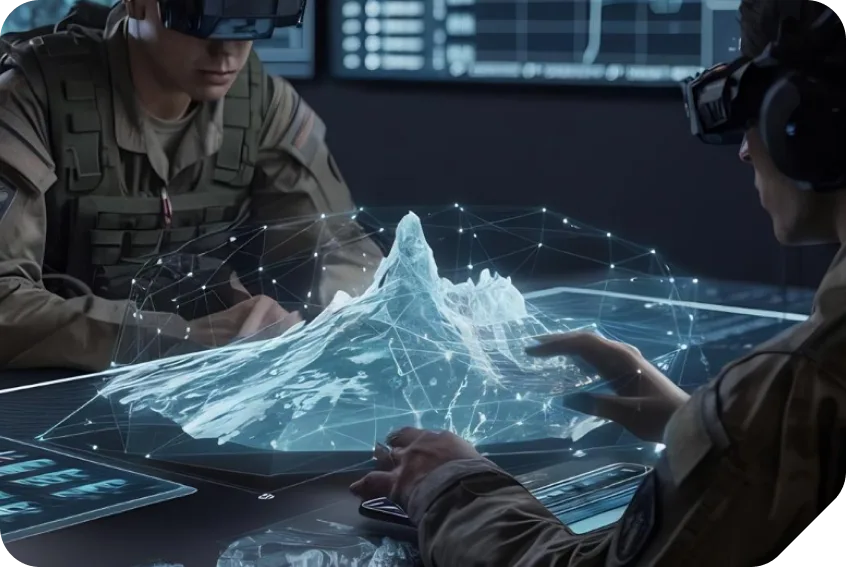
C4ISR & Battlefield
Management System (BMS) Integration
Connecting unmanned platforms into Command, Control, Communications, Computers,
Intelligence, Surveillance, and Reconnaissance networks — and into the BMS
frameworks that provide the common operational picture. This means developing the
interface layers, data formats, and latency profiles that allow robotic assets to
contribute to — rather than fragment — the operational picture.
Multi-Platform & Multi-Vendor
Interoperability
Defence deployments rarely involve a single platform from a single vendor.
THRSL engineers the bridging layers that allow platforms from different development
lineages to operate coherently under unified control — sharing data, accepting tasking,
and reporting status through a common interface.
Secure RF & Communications
Architecture
Design and implementation of communications architecture for robotic platforms
operating in electronic warfare environments. This includes frequency-hopping protocols,
encrypted data links, low-probability-of-intercept RF configurations, and resilient mesh
topologies that maintain command connectivity under jamming or degraded RF conditions.
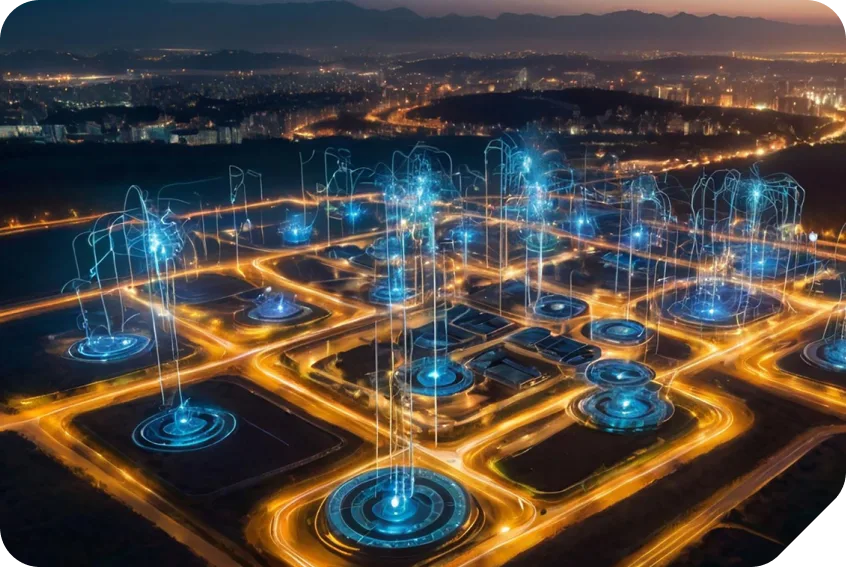
Sensor Grid & ISR Network
Integration
Integration of mobile robotic sensors into fixed surveillance infrastructure — allowing
UGVs and patrol robots to contribute dynamically to a persistent surveillance picture
managed from a central operations node. Includes data fusion, alarm management
interfaces, and operator alert protocols.
How We Work
We Start with
The Existing Architecture
Integration projects that ignore what is already deployed create more problems
than they solve. THRSL begins every integration engagement with a structured
assessment of the existing network, communication standards, and operator
workflows — and we design the integration to fit, not to replace.
Interface Control
Documentation
All integration work is delivered with complete ICD (Interface Control
Document) packages — the technical documentation that allows future
modifications, audits, and procurement reviews to be conducted with full
traceability.
End-to-end
Accountability
THRSL assumes responsibility for the integrated system, not just the
component we supplied. When an integration issue arises at the system level,
there is a single accountable party — not a set of vendors pointing at each
other.
Contact our integration engineering team to discuss a
specific programme requirement. Technical briefings
available under NDA for government bodies, PSUs, and
registered system integrators.